Smarter Spending with AI-powered FinTech for Parents+Kids
User Research, Product Design
August 2026
Solo Product Designer

A case study on an AI-powered family FinTech experience that helps parents guide their kids’ spending through smart nudges, automated insights, and actionable guidance.
Introduction
Context
As kids increasingly live their lives in digital devices, parents need better ways to guide their spending without constantly monitoring every transaction. This project explored how AI could help families build healthier financial habits.
Problem
Parents often have limited visibility into how their kids spend money digitally, making it difficult to spot unusual patterns or provide guidance at the right moment. At the same time, children need enough independence to develop healthy financial habits without feeling constantly monitored.
Solution
Create an AI-powered family wallet that automatically tracks and categorizes spending, surfaces meaningful patterns, and proactively nudges parents when something seems unusual, helping them guide their kids toward smarter financial decisions while encouraging greater independence.
My Role
Solo Product Designer
I worked on this case-study as the Solo Product Designer, leading the end-to-end design process from research and ideation to prototyping and validation. Throughout the project, I explored how AI could support parents and kids as they navigate learning financial literacy together as a family.

Research
Exploring AI-assisted financial habits for families
Before designing the experience, I needed to understand how parents guide their children’s financial habits and where technology could provide meaningful support. Research explored spending behaviors, parental concerns, and opportunities for AI to deliver informed financial guidance.
Research Methods

User Interviews
I interviewed five sets of families, gathering qualitative data about financial priorities, family relationships and daily money struggles.

Usability Tests
I also conducted live usability testing sessions with the users, observing how they use existing banking and wallet apps to budget their allowance or transfer funds.

Competitive Benchmark
I benchmarked the top three banking and wallet apps in the Philippines, evaluating the transfer, contact linking and child onboarding flow. This revealed various pain points.
Research Findings
Most family banking are still just a savings account for kids
“Most apps for families are still limited. Spend tracking is mostly limited to a physical passbook or transaction history. Still without big tech or any AI-powered solutions.”
No real family-focused fintech app in the Philippines
“While parents are able to guard where their kid’s money goes, controls are still limited to transaction limits with no real-time or granular settings to tinker if they want more control.”
Lack of financial literacy for kids in the fintech market
“There is a big opportunity to teach the next generation about financial health through fintech. And it starts where they already live their daily lives as kids: in a digital world.”

Define
Defining pain points in the digital allowance journey
Research insights were translated into key pain points, parent and child needs, and opportunities within the digital wallet experience. This phase helped identify where parents lacked visibility, where kids needed guidance, and where AI could provide timely support without limiting their financial independence.
Parent Flow

Kid Flow

Constraints & Trade-Offs
FinTech projects comes with complex regulatory boundaries, especially when introducing AI into a family experience. Balancing automation, parental oversight, and children’s independence require careful consideration. These were some of the key constraints identified during the definition phase.
1. Functional over conversational AI
The core AI experience here was intentionally designed beyond a chatbot feature. The focus was instead placed on solving everyday financial problems through proactive budget assistance, timely spending nudges, and guidance that builds financial habits and literacy.
2. Regulatory complications
Whether the product is an e-wallet or digital bank, either could present different but equally complex regulated environments. The challenge is to keep the end-to-end process feel simple, understandable, and trustworthy.
3. Away from AI’s reach
AI-powered shouldn’t mean constant data leaks. Stricter access definitions should be the first priority before letting AI touch sensitive financial data. In this context, AI should act only as a guide, not as a participant.

Design Solutions
Designing smarter family financial experiences
The final designs focused on giving parents greater visibility, helping kids build financial independence, and making spending easier to understand. AI-powered interactions were crafted to surface meaningful insights, provide timely nudges, and balance parental guidance with the child’s autonomy.
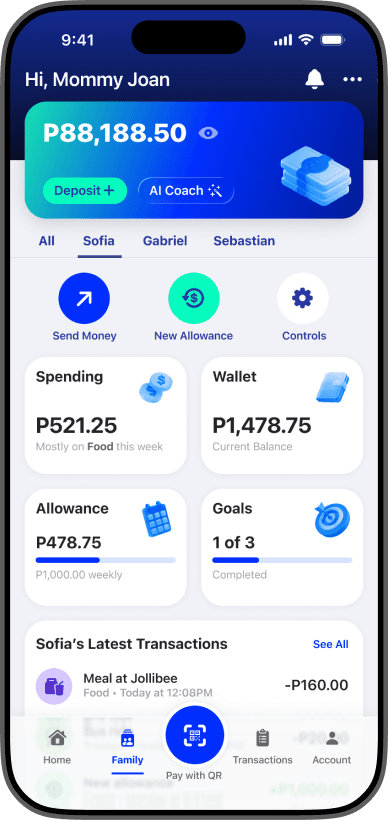
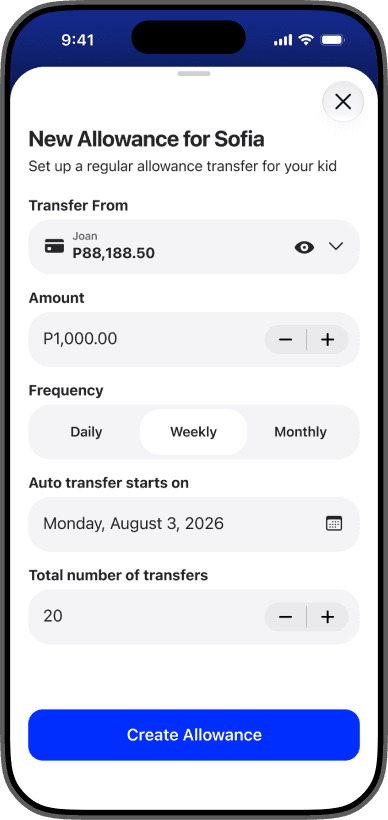
Parent: Automate a Digital Cash Allowance
EFFICIENCY
Parents can set a recurring allowance that automatically transfers to their child’s wallet. Reducing manual effort while giving kids a consistent and predictable way to manage their money.


Parent: Real-Time AI-Powered Insights and Controls
CONTROL
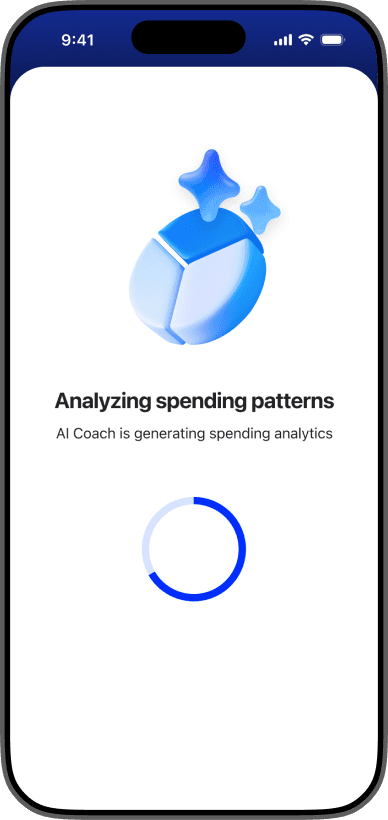
AI Coach continuously analyzes spending patterns, automatically categorizing transactions and surfacing meaningful insights that help parents understand where their kid’s money goes.


Kid: Automated Allowance & AI Coaching on Financial Literacy
TRUST
Kids receive their allowance automatically on a set schedule, giving them a predictable source of funds while encouraging them to practice budgeting, build savings goals and responsible spending.


Kid: Payments with AI Tracking
CLARITY
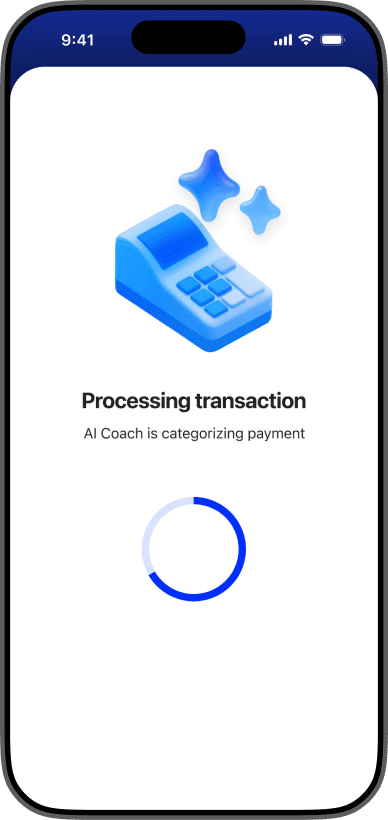
Every payment is automatically tracked and categorized by AI, helping kids understand their spending while giving parents a clearer view of their child’s financial activity.



Final Designs

Success Metrics
Measuring financial engagement and impact
Success is defined through a combination of user engagement, financial behavior, and business metrics. These measures provide a framework for evaluating whether the AI-powered experience helps families make smarter financial decisions while driving meaningful adoption and continued use of the platform.
Feature Adoption Rate
20-30%
target users engaging with the new AI-powered features
Track the percentage of users engaging with the new AI-powered allowance tracking features.
Retention Rate
7%
target retention rate after 30 days of launching AI features
Track total number of users who keeps returning to use the allowance tracking features.
Customer Satisfaction
2x
satisfied customers based on qualitative surveys
Monitor a survey-based rating of satisfaction of new AI-powered allowance tracking features.
Lessons Learned
1. What I’d do differently, if given the chance
I would explore more ways to personalize the AI Coach based on each family’s financial habits and goals. Parents could set different guidance levels, allowing the experience to adapt its nudges, insights, and recommendations as children develop greater financial independence.
2. Future improvements in mind
Financial literacy should evolve as children grow. The AI Coach could deliver age-appropriate lessons, introduce concepts such as saving and investing at the right stage, and create hands-on learning opportunities through chores, goals, and earned “salary.” These experiences could help turn everyday family activities into practical lessons about earning, spending, saving, and investing.